- What Is Piezoelectricity?
- Understanding Gloves Conductive Filament
- How Piezoelectric Properties Relate to Conductive Filament
- Factors Affecting Piezoelectric Performance
- Fiber Structure and Alignment
- Mechanical Stress Type
- Environmental Conditions
- Applications of Piezoelectric Gloves Conductive Filament
- Energy Harvesting Textiles
- Anti-Static Textile Applications
- Medical and Healthcare Wearables
- Conductive Filament Products for Smart Textiles
- Why Overseas Buyers Choose Taierxin Fiber
- Future Trends in Piezoelectric Conductive Textiles
- Conclusion
As wearable technology, smart textiles, and intelligent sensing systems continue to evolve, conductive textile materials are becoming increasingly important across industries such as healthcare, electronics, robotics, sports technology, and industrial safety. Among these advanced functional materials, Gloves Conductive Filament has attracted significant attention due to its excellent electrical conductivity, flexibility, and potential piezoelectric behavior.
The integration of conductive fibers into textile structures has opened new possibilities for interactive garments, motion sensing systems, anti-static products, and energy harvesting devices. In particular, the piezoelectric property of conductive filament materials is creating exciting opportunities for next-generation wearable electronics and smart textile innovation.
This article explores the science behind piezoelectricity, how it relates to gloves conductive filament, the factors affecting piezoelectric performance, and the industrial applications driving global demand for advanced conductive textile materials.
What Is Piezoelectricity?
Piezoelectricity is the ability of certain materials to generate electrical energy when mechanical stress is applied. In simple terms, when a piezoelectric material is bent, stretched, compressed, or vibrated, it produces an electrical charge.
The phenomenon also works in reverse. When an electric field is applied to a piezoelectric material, the material changes shape slightly. This bidirectional conversion between mechanical energy and electrical energy is the foundation of piezoelectric technology.
Piezoelectricity is widely used in:
Sensors
Actuators
Energy harvesting systems
Medical devices
Smart textiles
Motion detection equipment
Pressure monitoring systems
The effect originates from the internal crystal structure of the material. In piezoelectric materials, the atomic arrangement lacks central symmetry. Mechanical deformation causes charge separation inside the material, generating an electrical potential.
Understanding Gloves Conductive Filament
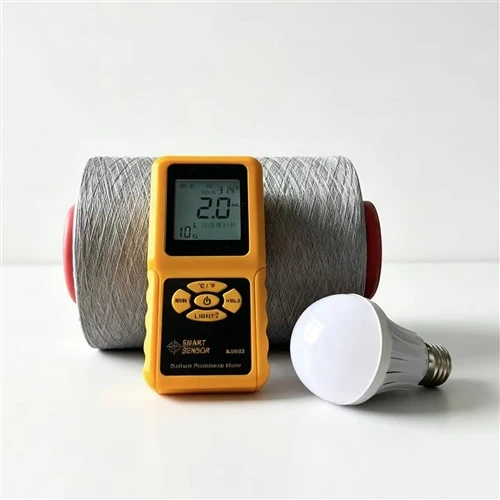
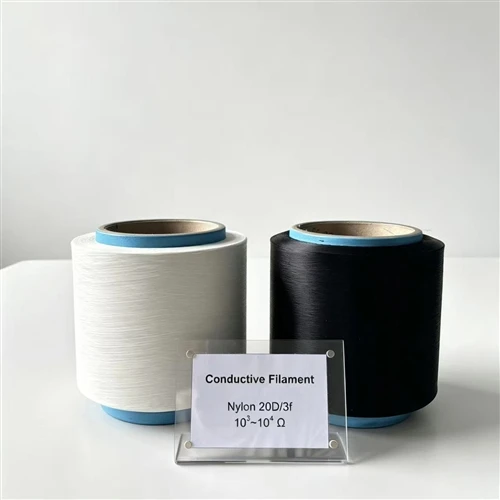
Gloves conductive filament is a specialized conductive textile material engineered to combine electrical conductivity with textile flexibility and durability. It is widely used in:
Touch screen gloves
Smart wearable devices
Anti-static gloves
Motion sensing systems
Industrial protective gloves
Healthcare monitoring textiles
The filament is typically manufactured by integrating conductive materials into synthetic fiber structures such as polyester or nylon.
Common conductive additives include:
Carbon nanotubes
Carbon black particles
Silver-coated fibers
Stainless steel fibers
Conductive polymers
Metallic micro-particles
These conductive components create electrical pathways throughout the yarn structure, enabling signal transmission and electrostatic dissipation.
How Piezoelectric Properties Relate to Conductive Filament
Although traditional conductive yarn is primarily designed for electrical conductivity, certain conductive composite structures may also exhibit piezoelectric or piezoresistive behavior.
When gloves conductive filament experiences mechanical stress such as:
Stretching
Compression
Bending
Twisting
Finger movement
the internal conductive network changes slightly.
This structural deformation can alter:
Electrical resistance
Voltage output
Current flow
Signal transmission behavior
These electrical changes can be measured and interpreted as motion or pressure signals.
In conductive textile systems containing carbon nanotubes or advanced nanocomposite materials, this behavior becomes especially significant for smart wearable applications.
Factors Affecting Piezoelectric Performance
Several important factors influence the piezoelectric and electromechanical behavior of gloves conductive filament.
Material Composition
The type and concentration of conductive materials directly affect electrical sensitivity and piezoelectric response.
For example:
Carbon nanotubes provide excellent flexibility and conductivity
Metallic particles improve electrical signal transmission
Conductive polymers enhance textile compatibility
Nanomaterials are particularly effective because they create highly responsive conductive networks within the fiber structure.
Fiber Structure and Alignment
The internal arrangement of conductive particles inside the filament influences how efficiently mechanical stress is converted into electrical signals.
Well-aligned conductive pathways generally provide:
More stable conductivity
Better signal sensitivity
Improved durability
Faster response times
Advanced spinning technologies can optimize particle distribution and fiber orientation.
Mechanical Stress Type
Different forms of mechanical stress produce different electrical responses.
Examples include:
Tensile stress from stretching
Compression from gripping pressure
Bending during hand movement
Shear stress during fabric deformation
Understanding these responses is critical when designing wearable sensing systems.
Environmental Conditions
Environmental factors such as humidity, temperature, and repeated mechanical use can affect conductive textile performance.
High-quality conductive filament materials are engineered to maintain stable electrical behavior under varying operating conditions.
Applications of Piezoelectric Gloves Conductive Filament
Smart Wearable Sensors
One of the most promising applications is wearable sensing technology.
Conductive gloves with piezoelectric functionality can detect:
Finger movement
Hand gestures
Pressure intensity
Motion patterns
Grip force
These smart gloves are increasingly used in:
Virtual reality systems
Robotics control
Human-machine interfaces
Rehabilitation therapy
Sports performance analysis
The conductive filament converts mechanical movement into electrical signals that can be processed by electronic systems in real time.
Energy Harvesting Textiles
Piezoelectric conductive filament can also be used for wearable energy harvesting systems.
Human movement naturally generates mechanical energy during daily activities such as:
Walking
Grasping
Finger movement
Exercise
Arm motion
Piezoelectric textile systems can convert this mechanical energy into small amounts of electrical power.
Potential applications include:
Self-powered wearable sensors
Smart medical monitoring devices
Portable electronic accessories
Low-energy Bluetooth modules
As wearable electronics continue to evolve, energy harvesting textiles are expected to become an important research and commercial direction.
Anti-Static Textile Applications
The conductive nature of gloves conductive filament also makes it highly effective for anti-static applications.
Electrostatic discharge (ESD) is a major concern in industries such as:
Electronics manufacturing
Semiconductor production
Cleanroom operations
Petrochemical facilities
Conductive filament integrated into protective gloves helps dissipate static electricity safely, reducing the risk of equipment damage and workplace hazards.
In some advanced conductive textile systems, piezoelectric effects may further assist electrostatic charge management by improving electrical responsiveness during movement.
Medical and Healthcare Wearables
Smart conductive gloves are increasingly being used in healthcare monitoring and rehabilitation systems.
Applications include:
Hand movement tracking
Muscle activity monitoring
Rehabilitation assistance
Motion therapy analysis
Elderly care systems
Flexible conductive filament materials offer the comfort and sensitivity required for long-term wearable medical applications.
Conductive Filament Products for Smart Textiles
Modern textile manufacturers now require conductive yarn solutions that combine:
Stable conductivity
Mechanical flexibility
Durability
Wash resistance
Signal sensitivity
Textile compatibility
Popular conductive filament products include:
Conductive Fiber DTY 75D12F
Nylon conductive fiber filament
Carbon conductive yarn
Polyester conductive filament
Composite anti-static yarn
These materials support both traditional anti-static applications and next-generation wearable electronics.
Why Overseas Buyers Choose Taierxin Fiber
For overseas buyers searching for reliable conductive filament manufacturers, Taierxin Fiber has become a trusted supplier in the global conductive textile materials industry.
Taierxin Fiber specializes in conductive yarns, anti-static fibers, gloves conductive filament, and functional textile materials designed for wearable electronics, industrial safety textiles, and smart textile applications.
The company offers a wide range of conductive textile products including:
Conductive Fiber DTY 75D12F
Nylon conductive fiber filament
Conductive yarn for touch screen gloves
Anti-static textile yarn
Carbon conductive filament
Composite conductive fibers
One of the major advantages of Taierxin Fiber is its focus on advanced conductive textile technology and customized production capabilities. The company supports different conductivity levels, yarn structures, resistance requirements, and textile application needs for overseas manufacturers and industrial buyers.
With advanced manufacturing systems and strict quality control procedures, Taierxin Fiber provides stable electrical performance, excellent flexibility, and long-term durability for wearable and industrial textile applications.
For importers, smart textile developers, glove manufacturers, wearable device companies, and industrial fabric suppliers, Taierxin Fiber offers flexible OEM/ODM services and professional technical support, making it an ideal long-term conductive filament partner.
Future Trends in Piezoelectric Conductive Textiles
The global smart textile industry is expected to grow rapidly as wearable electronics become increasingly integrated into everyday life.
Future developments may include:
AI-integrated smart gloves
Flexible health monitoring systems
Self-powered wearable devices
Textile-based sensors
Interactive industrial workwear
Intelligent rehabilitation garments
Conductive filament materials with piezoelectric or piezoresistive functionality will play a critical role in enabling these technologies.
Manufacturers capable of combining conductivity, flexibility, durability, and sensing performance will gain significant competitive advantages in the future smart textile market.
Conclusion
The piezoelectric property of gloves conductive filament represents an exciting advancement in the field of functional textiles and wearable electronics. By combining electrical conductivity with mechanical responsiveness, conductive filament materials can support a wide range of innovative applications including smart gloves, wearable sensors, anti-static textiles, and energy harvesting systems.
As industries continue to adopt intelligent textile technologies, demand for advanced conductive yarn solutions will continue to rise worldwide.
By providing high-quality conductive fibers, customized textile solutions, and stable electrical performance, companies like Taierxin Fiber are helping overseas buyers develop safer, smarter, and more innovative textile products for the future.